
How If AI Runs Our Oral Exams? (Opinotes #3)
Written homework no longer proves anyone thought. Some honest notes on bringing back oral exams with AI, and the mechanisms it needs to actually help students learn.
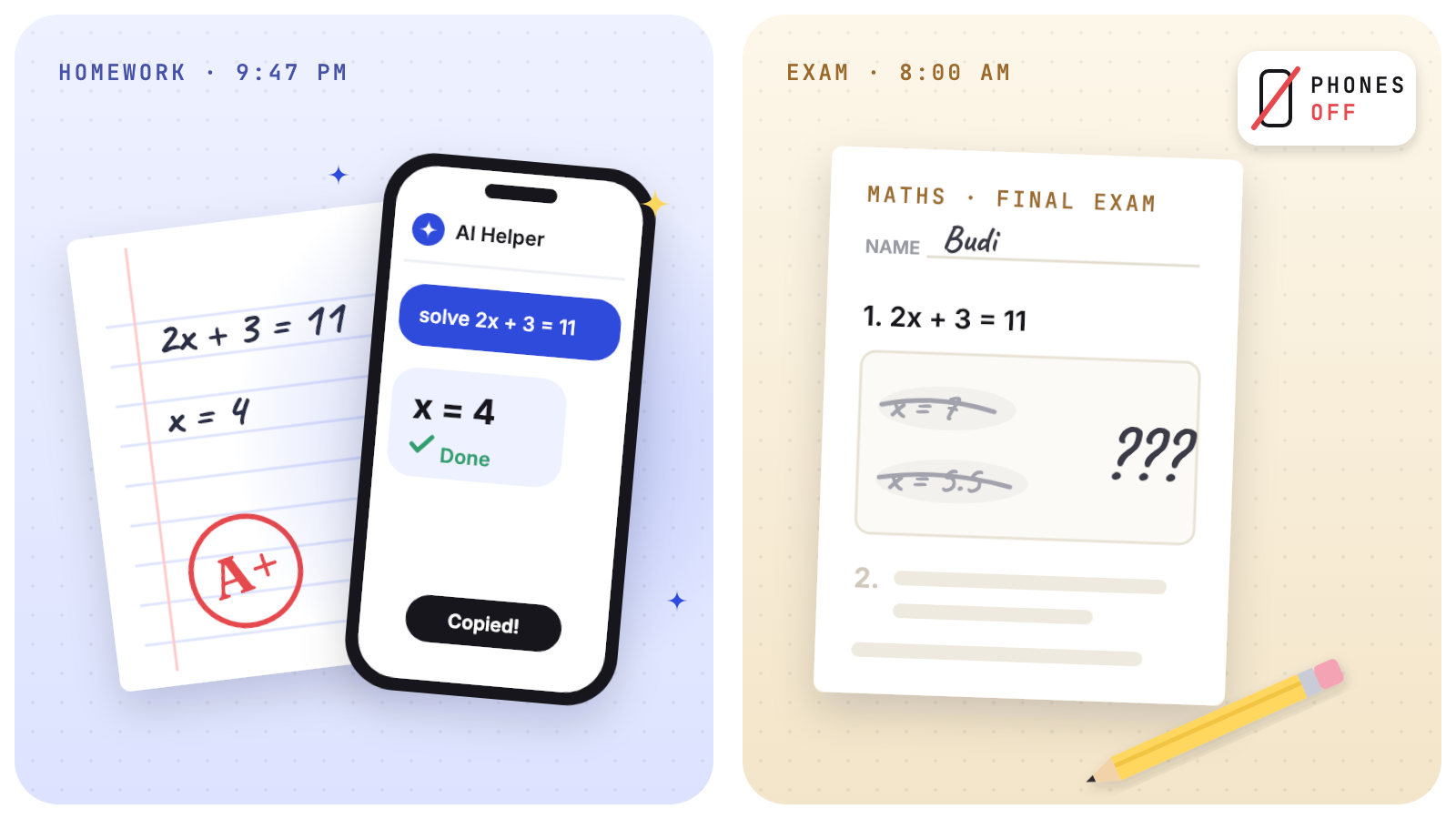
It has been a while since my last proper write-up. Life happened, as usual.
But one question kept bugging me the whole time. If AI can write almost any answer now, how do we even know a student understood it?
Welcome to Opinotes #3. My answer so far is an old one, the oral exam, but with AI. Short version, I think AI is essential for education now, but only with the proper mechanisms around it.
(Don't worry, this is not a "kids these days" rant. If I had ChatGPT at 15, I would have abused it too.)
Answers Are Free Now. So What?
Any student with a phone can get a worked solution, a polished essay or a neat summary in seconds. That should be the best thing that has ever happened to education. So far, it mostly is not. Homework has never looked better. Exam results did not get the memo.
Back in January I wrote that Indonesia ranked 69th out of 81 countries in PISA 2022. Well, the PISA 2025 results came out in September. Spoiler alert, not much changed. We scored 364 in maths, 365 in reading and 389 in science, roughly 100 points below the OECD average and essentially flat since 2022.
Here is the twist though. About 90% of our 15-year-olds are now in school. So we have mostly solved getting kids into classrooms. We have not solved making sure they learn once they are there.
I have spent the last two years on this problem through an education project I co-founded in 2024, which now serves more than 10,000 learners. So these are notes from the field, not just hot takes.
Bring Back the Spoken Exam
In August 2026, an MIT committee concluded that AI can produce credible answers to almost any written assignment, and recommended oral exams and portfolios instead. Professors at Cornell, Penn and NYU have started using oral exams too. Written work no longer shows whether a student actually thought.
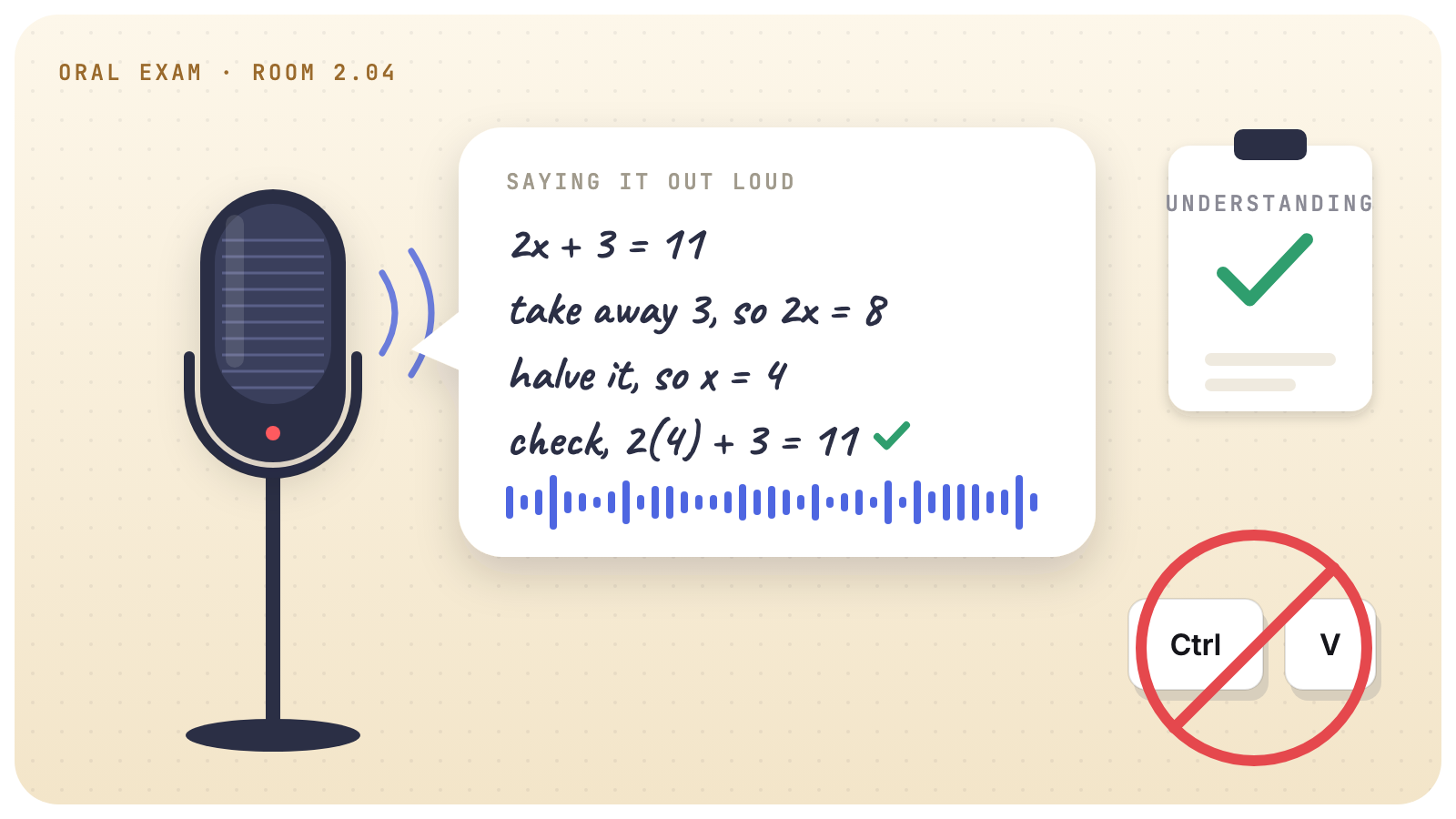
Speaking does. When a student explains their reasoning out loud, you can hear whether it is theirs.
If you read my January write-up, you already know about the rooster. I was debugging the audio of an interview-practice feature, and the only way to debug audio is to listen. Then I heard it. A rooster crowing in the background of a village morning, and a young woman practising for her LPDP interview like she had nothing to lose. You could hear everything in her voice. The reasoning, the nerves, the hunger. No essay would have shown me that.
The catch is scale, and the conversation itself is hard to get right. When a professor at NYU tried an AI-run oral exam, most students found it more stressful than a written test. One of his lessons was that the AI did not let students think. They paused, and it jumped straight in. Whoever gets this right has to make it feel like a patient conversation, not an interrogation. And getting that right is less about the model and more about the mechanisms around it.
The Real Bottleneck? Feedback.
There is no shortage of content. Textbooks, videos, question banks, and now chatbots that can explain anything. What students lack is feedback. With one teacher for every thirty students, most mistakes never get corrected in any structured way. Thirty notebooks, one red pen. The red pen loses every time.
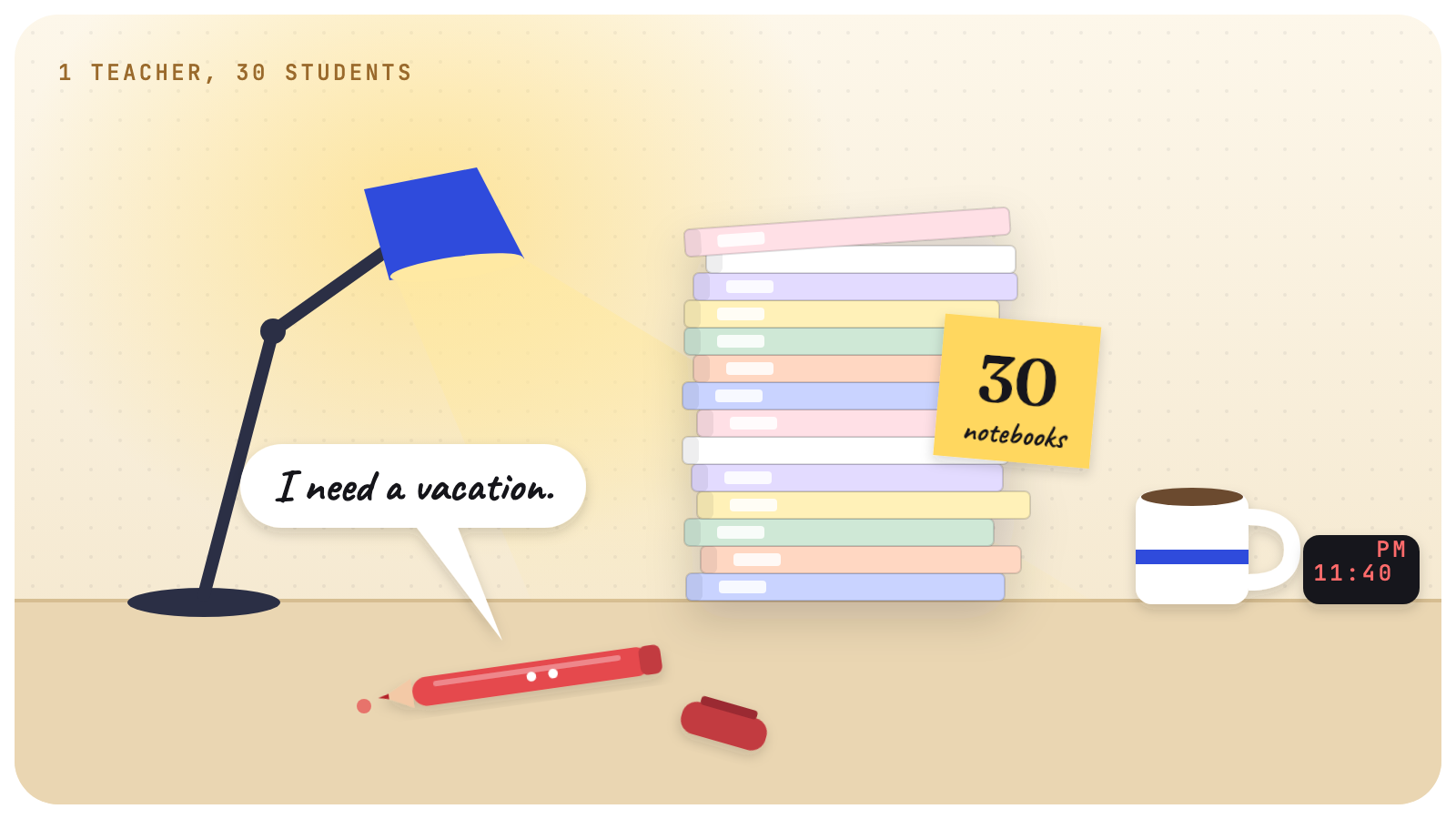
This is where AI genuinely changes the maths. Writing personal feedback for one student at a time is slow for a teacher, but cheap for a model.
But generating text is the easy part. Writing feedback a 15-year-old will actually read, and act on, is the hard part. Technology is great at optimising logistics at scale. It does not automagically improve how people learn. Someone has to design for that, on purpose.
Hints, Not Answers
There is a study I keep coming back to. High school students who practised maths with a plain ChatGPT-style tool scored 17% lower once it was taken away than students who never had it, while a version built to act like a tutor largely avoided that drop. Professor Stella Christie, Indonesia's Deputy Minister of Higher Education, Science and Technology, has reminded students that critical thinking is what lets us judge what AI gives us. That is the line I care about, between AI that supports learning and AI that replaces thinking.
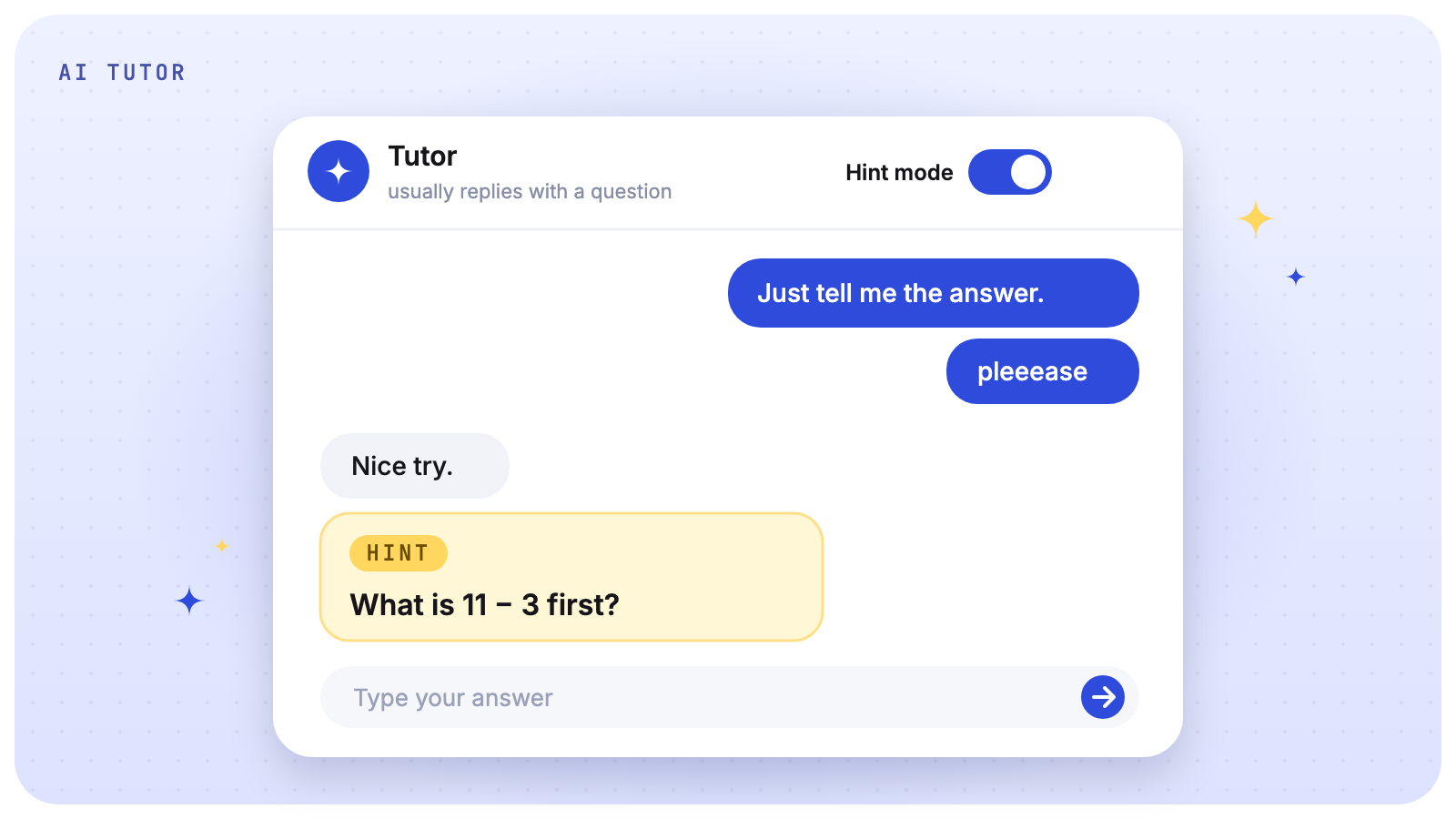
Most AI tutors today are general models prompted to act like teachers. And those prompts drift toward instant gratification. The student asks, the model answers, everyone feels good, nobody learns. It is like a gym where the machine lifts the weights for you.
So a good tutor should give hints and ask questions back, not hand over the answer. And when a student pushes hard for the answer? That is a test the tutor has to pass, not a customer it has to please.
Switch the AI Off. Then What?
Honestly, there is only one result that matters. Do students reason better once the AI is gone? Think of it as taking the floaties off to see who can actually swim. That is the test I would run on every AI learning product, including ours.
It also means being honest about short-term metrics. A session that feels smoother and more fun is not progress if the same students do worse a week later. Engagement is not learning.
Keep Teachers in Charge
The point is not to replace teachers. It is to extend their reach. Teachers set the learning goals and step in where human judgment matters. The tutor handles the repeated practice in between, using methods teachers actually endorse.
That only works if teachers can see what the tutor does and correct it when it gets things wrong. Teachers have been giving that kind of feedback for centuries. They just called it "see me after class".
Confidently Wrong Is the Worst Kind of Wrong
Every class has that one student who is always sure and often wrong. AI can be that student too.
I do not think an AI tutor deserves trust just for being right most of the time. It deserves trust for knowing when it might be wrong, and for saying so, so a teacher can step in.
Design for Rote, Not Just Jakarta
Rote is Indonesia's southernmost island. There is no English test centre there. The nearest seats are in Kupang, on the next island, and they are scarce, so students wait months or fly to Bali. Even the cheapest route costs nearly twice the province's monthly minimum wage (I did the maths here). A student in Jakarta takes a bus for about 0.6% of it. If the score comes back half a band short, the Rote student pays it all again. For them, preparation is the only way to make one attempt count.
That is who AI in education should be designed for first. In our education project, the work I care about most is with grassroots communities in Papua, Maluku Utara and Rote, where we have given more than 1,500 students free access. In the cohorts we tracked, every participant passed the LPDP scholastic test, and seven won the scholarship last year.
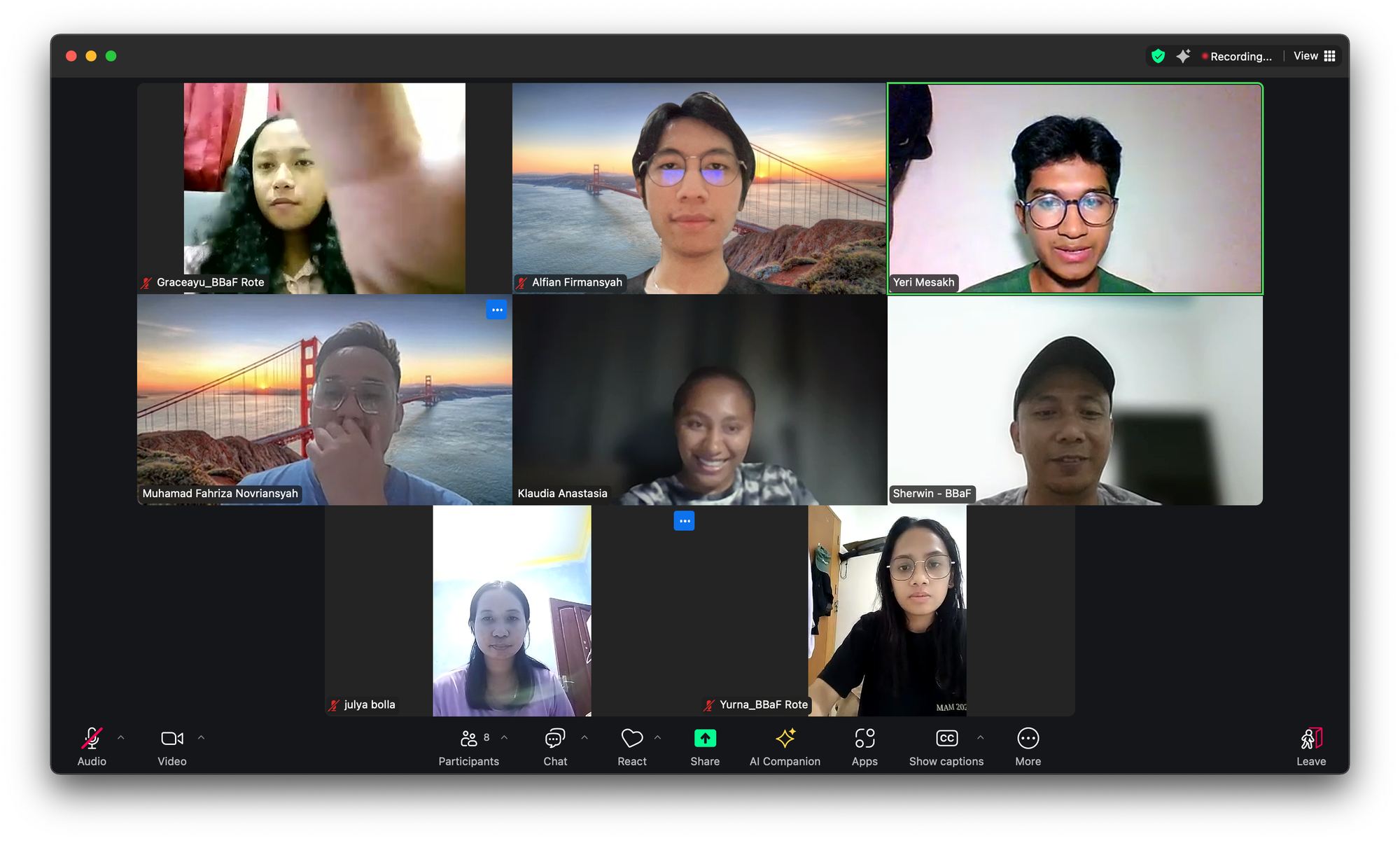
Designing for the edge changes how you build. When learners in Papua told us the platform stalled on their 2 Mbps connections, we had to rethink it for slow internet and for people with limited digital literacy. It also changes how you treat data. Children's learning data is a responsibility, not a feature.
Final Thoughts
I do think AI is essential for education now. Banning it will not work, and pretending it is not there will not either. Students already use it every day.
But essential does not mean automatic. AI only helps when the right mechanisms are around it. Hints instead of answers. Tests with the AI switched off. Teachers who stay in charge. A tutor that knows when it might be wrong. Without those, AI can make education look better without actually making it better.
For the next student on Rote, I want all of this to mean one thing. Preparation that makes one costly attempt count, without having to board a plane to Bali.
Thanks for reading. Drop me a message, I would love to hear how you are learning (or teaching) with AI.
See you in another Opinotes! Cheers~ 🥂
References
- OECD (2026). PISA 2025 Results, Volume I. Indonesia country note.
- GoodStats (2024). Posisi Indonesia di PISA 2022, siapkah untuk 2025?
- Gebrak.id (2026). PISA 2025, skor literasi dan sains Indonesia naik, akses pendidikan tembus 90 persen.
- Bastani, H., Bastani, O., Sungu, A., Ge, H., Kabakcı, Ö. and Mariman, R. (2025). Generative AI without guardrails can harm learning, evidence from high school mathematics. PNAS 122 (26).
- ANTARA News (2026). RI Govt urges critical thinking as AI reshapes campus life.
- MIT (2026). AI and education, a watershed moment for MIT. Report of the Ad Hoc Committee on AI Use in Teaching, Learning, and Research Training.
- GadgetReview (2026). AI can solve almost any homework assignment tonight. Here is how MIT is responding.
- Associated Press, via WHYY (2026). Perfect homework, blank stares. Why colleges are turning to oral exams to combat AI.
- The Decoder. NYU professor fights AI cheating with AI-powered oral exams that cost 42 cents per student.
- Ipeirotis, P. (2025). Fighting fire with fire. Scalable personalized oral exams with an ElevenLabs voice AI agent.
- Ipeirotis, P. and Rizakos, K. (2026). Scalable and personalized oral assessments using voice AI. arXiv 2603.18221.
- Alfian Firmansyah (2026). 2026 Mindset, Mental, Model.
- The cost of one IELTS attempt from Rote, my own breakdown from published ferry fares, the IELTS fee and the provincial minimum wage.
Comments